

Key Takeaways
- PFA orders can mandate immediate firearm and ammunition surrender and need to be treated seriously to prevent criminal charges. Follow the order’s directions regarding to whom they will be sent.
- Defendants must surrender weapons, permits, and ammunition within 24 hours of service unless the court extends it. Record all steps with receipts and retain copies for court submissions.
- Authorized entities include the sheriff’s office, local police, or licensed firearms dealers. Private transfers are not allowed unless the court approves.
- File proof of surrender with the court immediately, with specific receipts documenting make, model, and serial numbers, and keep the compliance paperwork neatly stored in a special folder.
- For dismissed or expired PFA, PFA courts return guns, petition for full or partial dismissal, verify compliance, PA Instant Check, and no other prohibitions.
- Be proactive. Look up order terms right away, mark deadlines on your calendar, keep ordered records, and communicate with the court and authorized custodian to minimize risk and maintain compliance.
PFA orders and firearm surrender in PA, legal steps can limit access to guns when a court identifies a danger. They can order surrender within certain time periods, and they can notify the state police to flag prohibited possession. Penalties range from fines to criminal charges for noncompliance and procedures vary by county. Below the fold covers who has to surrender, how to do it, timeline, record checks, and common defenses.
Protective Orders Explained
In Pennsylvania, a Protection From Abuse (PFA) order serves as a civil court order designed to shield individuals experiencing domestic violence, stalking, sexual assault, or valid threats. This protection order is not a criminal sentence; rather, it imposes court-enforceable legal restrictions on the purported abuser’s conduct, including a prohibition on firearm possession, and provides the court with mechanisms to protect the protected individual during civil-based remedies.
What a PFA is and how you get one
To receive a protection from abuse order, a petitioner submits a written petition at the county courthouse where either party resides or where the domestic violence occurred. The petition should outline recent events and fear for safety. Courts can issue a same-day temporary PFA if the judge finds immediate danger, often referred to as a temporary pfa order. This is followed by a full hearing, typically within 10 days, where each side offers evidence. The judge then rules on whether to order a final PFA, which can be effective for up to three years and is extendable in certain circumstances. Examples include a renter who alleges repeated threats by a roommate filing at the local courthouse or a parent alleging assault by a former partner and requesting immediate protection for their child.
Typical restrictions a PFA can impose
A PFA can bar contact in many forms, including phone, text, email, and social media. Additionally, the protection from abuse order may require the defendant to relinquish their firearms and leave a shared residence while maintaining a distance from the petitioner’s employment, school, or elsewhere. Courts can also add temporary custody and visitation provisions, ordering the defendant to pay support or undergo treatment as part of the PFA process. For instance, a final order can force an abuser to vacate an apartment within 24 to 72 hours and stay 100 meters away from the petitioner’s residence and job.
Firearm prohibitions and surrender requirements
PFA orders frequently impose temporary or permanent firearms bans when the judge deems a threat. Under state and federal law, a qualifying protection from abuse order can trigger a ban on purchasing, owning, or possessing firearms and ammunition. Defendants may be required to relinquish their firearms to law enforcement officers, a licensed dealer, or another authorized individual within a specified time frame. If you don’t turn yourself in, you face criminal charges. For example, a defendant must turn over firearms to the sheriff within 48 hours and provide a receipt. Failure invites arrest and added penalties.
Mandates For Disarmament
In Pennsylvania, defendants served with a protection from abuse order are mandated to surrender firearms, ammunition, and any permits within 24 hours of service. This relinquishment requirement for disarmament is based on Act 79 of 2018 and extends to both temporary and final protection from abuse orders unless the Court specifies otherwise. The law allows the court to designate which weapons are surrendered and to whom: local law enforcement, the county sheriff, or a licensed gun dealer with secure storage capacity. Failure to comply can lead to charges, fines, and an extended firearms prohibition.
Emergency Rulings
Ex parte temporary PFAs can be issued without the defendant present when a judge determines that the petitioner is at immediate risk. Often, these temporary orders compel the surrender of guns and ammunition under the protection from abuse act, and they are drafted to safeguard the requestor prior to a hearing. They usually stay short-term, sometimes just until the court’s last hearing date. Officers serving an emergency PFA may be ordered to confiscate firearms immediately, especially if the final protection from abuse order mentions weapons in the residence, which can be taken during service to prevent immediate danger.
Final Adjudications
A final protection from abuse (PFA) order follows a full hearing, during which both parties present evidence and testimony, allowing the judge to decide if continued protection from domestic violence is warranted. Emergency final orders frequently include longer-term prohibitions on firearm possession, potentially lasting up to three years based on case specifics and legal limits. The court will stipulate the conditions under which surrendered firearms will be returned, potentially requiring background checks, proof of secure storage, or court approval prior to their return. For instance, a judge might require safekeeping with a licensed dealer throughout the order’s duration, alongside a petition and hearing to reclaim the firearms.
| Restriction Type | Typical Duration | Potential Penalties | Conditions for Return |
|---|---|---|---|
| Emergency temporary surrender | Days to weeks | Contempt, misdemeanor charges if violated | Return at final hearing or seizure release |
| Final PFA firearms ban | Up to 3 years | Felony or misdemeanor charges, fines | Court hearing, proof of eligibility, safety measures |
| Court-ordered storage with dealer | Order term | Civil penalties for noncompliance | Dealer release only on court order |
Consent Agreements
Parties may settle protection from abuse orders by consent agreements that do not require an admission of liability but impose protective terms. These agreements often include firearm possession provisions and possession orders specifically oriented to the safety requirements of the petitioner. The court must approve any consent agreement to ensure it meets legal standards for protection from abuse. In certain instances, the accord might permit the defendant to retain firearms solely on the condition that the judge specifically authorizes possession and imposes restrictions like safe storage or restricted access.
The Surrender Process
When a PFA order is issued in Pennsylvania, the court moves quickly to require the defendant to relinquish their firearms and associated equipment. The other subsections discuss timing, approved custodians, necessary paperwork, secure storage, and filing proof with the court. Understanding the firearms relinquishment process is crucial to satisfy court requirements and avoid additional legal exposure.
1. Strict Timelines
Under Pennsylvania law, defendants are required to relinquish their firearms upon service of a PFA order within 24 hours. Extensions are seldom given and only for well-documented cause approved by the court. Failure to meet the 24-hour deadline can be considered a breach of the order and can result in indirect criminal contempt or additional sanctions. To demonstrate timely compliance if challenged, use a calendar with multiple reminders, chart deadlines visually, and record any court-approved extensions.
2. Authorized Custodians
Surrendered firearms must go to an approved custodian such as the county sheriff, a local police department, or a federally licensed firearms dealer (FFL) that accepts surrendered weapons. Transfers to friends, family, or private storage are prohibited unless the court specifically permits it under the protection from abuse act. The appointed trustee must provide a receipt for every item seized to comply with the firearms relinquishment requirements. Otherwise, bulk or improper transfers may lead to forfeiture and other penalties, so verify acceptance ahead of time and record every handoff.
3. Mandatory Receipts
When undergoing the process of relinquishing firearms, it is essential to request a thorough written receipt for each gun, cartridge, and license surrendered. Receipts should note make, model, caliber, and serial number when possible, as well as the date, time, and name of the custodian to whom they’re being delivered. These records serve as primary proof of submission, helping to avoid disputes regarding the items handed in during the protection from abuse proceedings.
4. Storage Protocols
Authorized custodians must keep surrendered weapons secured for the duration of the protection from abuse order. Storage conditions and fees differ by county and by custodian. Inquire about costs and written policies prior to surrendering any firearms. Access to secured firearms is generally disallowed until the order expires or is otherwise lifted by the court. Keep your own inventory list to compare to the custodian’s and to facilitate quick retrieval if permitted later.
5. Compliance Filings
Surrender as ordered by the court within the time allowed by the order. File proof of relinquishment with the court. Attach receipts, affidavits, and any correspondence demonstrating delivery to an authorized custodian. Not filing proper papers can bring on additional court action. Maintain a folder with originals and scanned copies for easy access during hearings or follow-up questions.
Checklist: Notify custodian, transfer only to authorized party, obtain detailed receipts, file receipts with court, retain copies, track deadlines, and document storage terms.
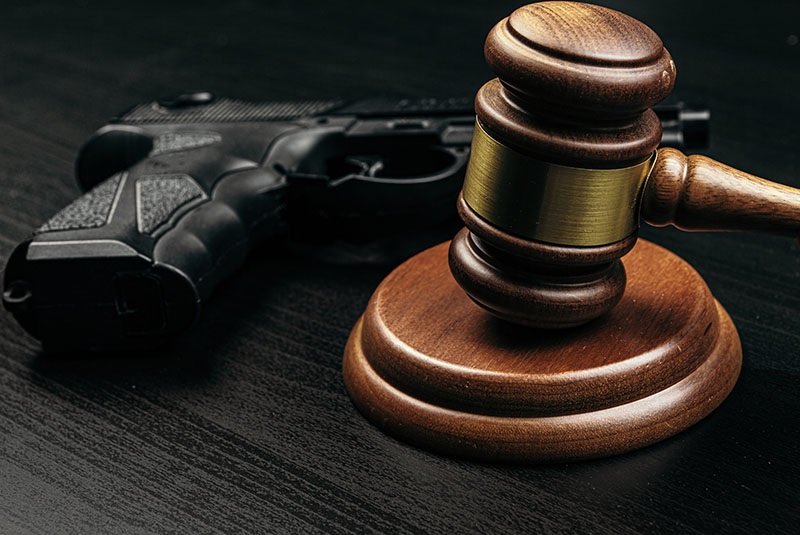
Violations And Penalties
Violations And Penalties
A person served with a Pennsylvania PFA order must surrender firearms and related items. Deliberate or knowing refusal to surrender weapons where the order demands it is a state law criminal offense. If someone stashes guns or gives them to a third party to evade surrender, or just flat out declines to turn them in, prosecutors can charge the PFA violation as well.
Indirect Criminal Contempt, Fines, Jail Time, and Loss of Rights
Violating a court-ordered surrender of a firearm can result in indirect criminal contempt, particularly under the protection from abuse act. Indirect contempt, which can lead to fines and jail time, is used when the violation occurs outside the court’s presence. In practice, a judge can hold a hearing, hear evidence, such as police reports or testimony, and impose criminal penalties. Fines vary based on case facts and judicial discretion. Jail sentences can range; even brief periods can have a profound impact on jobs, immigration status, and family stability. A conviction related to a PFA violation can result in a lifetime prohibition on firearm possession under state law, affecting one’s legal rights.
Federal Offense Under the Gun Control Act
Violating a protection from abuse order with guns or ammo in possession can be a violation of federal law as well. The Gun Control Act forbids any person subject to a court order restraining them from harassing, stalking, or threatening an intimate partner from possessing firearms or ammunition. This includes those who have been involved in domestic violence misdemeanors. Federal charges can be lodged even if states do not press separate criminal contempt counts. Federal sentences typically include hard prison time and enduring collateral consequences such as loss of civil rights and impediments to working in designated industries. For instance, a PFA holder who maintains a handgun at home could be subjected to distinct federal prosecution that proceeds in parallel with the state actions.
Law Enforcement Seizure of Weapons
During the PFA process, police can confiscate the defendant’s weapons, particularly in cases of domestic violence. These firearms may be seized during a welfare check, compliance check, or upon arrest, and are typically recorded and stored as evidence. The return of seized firearms is not guaranteed; courts will evaluate whether the protection from abuse order is still active, if there are pending criminal charges, and overall public safety. For instance, if a temporary PFA order is in effect and the defendant faces contempt charges, the court may impose a permanent forfeiture. Consulting with an attorney early in the proceedings can significantly improve the chances of a favorable outcome.
Reclamation Of Property
Flynn’s law, which we discuss below, exemplifies how domestic violence issues arise, among other factors. The court must first ensure there are no legal impediments to any return, including verifying compliance with a protection from abuse order. This means courts, law enforcement agencies, and dealers will take certain steps to confirm eligibility, such as background checks and ensuring no new convictions or restrictions on the defendant. It all begins with a court order; informal contact with police or a dealer is generally insufficient.
Dismissal Filings
When a protection from abuse order (PFA) is dismissed or expires, a request for the return of property can be made. The motion should specifically identify the items being requested and include the PFA case number. It is crucial to attach any supporting documentation, such as purchase receipts, serial numbers, photographs, or previous registration records, to establish a connection between the property and the plaintiff. Additionally, demonstrating compliance with the court’s conditions, such as showing that the weapons were relinquished in accordance with the court’s order, is essential.
The court will review the motion and accompanying documents, and a judge may hold a hearing to allow both sides to present evidence and objections. During this hearing, the court will assess whether returning the items would violate any protective or public-safety regulations. It is important to note that firearms will not be returned until the court issues a written order directing a law enforcement agency or licensed dealer to facilitate the transfer of the items to the defendant.
Eligibility Checks
Prior to a firearm leaving government or dealer possession, the defendant must successfully undergo a Pennsylvania Instant Check System (PICS) screening and satisfy all state and federal standards. The PICS check confirms if the individual is restricted from owning firearms due to criminal convictions, warrants, protective orders, or mental health adjudications. Any subsequent criminal charge, conviction, or protective order after the original PFA can block reclamation.
Police and licensed gun dealers have a duty to check eligibility prior to transfer. A dealer is not going to do a transfer without a good PICS result and the court’s written order. Check every potential legal restriction before filing. Federal, state, and local jurisdictions may each have their own prohibitions. If in doubt, check with counsel or check with the court clerk about what records to assemble and what checks will be run.
Practical Legal Strategies
In Pennsylvania, protection from abuse orders frequently include firearm surrender language, necessitating that the defendant relinquish any firearms. It’s crucial to read each paragraph of the order immediately upon service, noting deadlines and who is required to possess the surrendered guns. Additionally, check if temporary transfer to a third party is permitted, along with any necessary proof of surrender. If you encounter vague language, seek clarification in writing from the clerk or your lawyer to avoid potential criminal exposure related to domestic violence misdemeanors.
Recommend carefully reviewing all PFA order terms and firearm relinquishment requirements upon service
Request a copy of the protection from abuse order immediately and store the original securely. Look for numeric dates and names of specific persons or agencies authorized to take custody. Check if the order mandates surrender to local law enforcement agencies, a licensed gun dealer, or some other designated holder. Take note of what guns are included, such as make, model, caliber, and serial number if possible. Where the order permits temporary transfer, verify that the transferee must be a licensed person or “private individual,” and they must give written acceptance. If the order includes immediate surrender, prepare safe transport to the assigned custodian to prevent noncompliance charges related to firearm possession.
Maintain organized records and compliance strategies
- Maintain a paper and electronic folder for all PFA-related documentation.
- PFA order, receipts or court filings, proof of surrender—scan and date-stamp.
- Preserve emails, text messages, and call logs with police or the custodian.
- Obtain written receipts from the police department or dealer indicating the date, time, and items turned over.
- HOPE AND PRACTICAL LEGAL STRATEGIES File certified mail receipts if you transmit papers to the court or custodian.
- Record deadlines on a calendar, with alerts no less than seven days and 24 hours prior to due dates.
- Record the names, badge numbers, and contact information of any officers or staff you interact with.
It’s essential to keep receipts and court filings as necessary, especially when dealing with firearm retention during a protection from abuse order. Court clerks and police frequently provide a receipt or property form when they receive firearms. Keep that receipt both in hardcopy and as a scanned PDF. If a dealer is keeping the gun, request a written storage contract and detailed inventory. If law enforcement releases the gun later, get a signed release indicating the condition and chain of custody.
Proactive communication with court and authorized custodians
Call the court clerk to verify filing procedures for proof of surrender and any necessary forms related to the protection from abuse process. Email a copy of receipts and request confirmation of receipt. If you’re working with law enforcement agencies or dealers, ask for their written policies on storage fees, pickup requirements, and identification necessary to pick up guns. If you can’t comply by the deadline due to travel or medical issues, file a quick motion to the court explaining the facts and requesting a short, formal extension rather than risking noncompliance.
Conclusion
PFA orders and firearm surrender in Pennsylvania
The rules on PFA orders and firearm surrender in Pennsylvania shape safety and rights. Courts order individuals to relinquish firearms and allow local law enforcement to facilitate the surrender. Police officers record and keep firearms, and failure to meet the deadline means criminal charges or jail. Court steps let owners request return when the order expires, but the process requires documentation, delays, and screenings. One excellent piece of advice is to be sure you have clear proof of ownership, fast action at court, and a lawyer who knows local practice. For the PFA individual, consult an attorney, inventory your belongings, and keep your court dates. If you’re named in an order, abide by its terms and obtain legal assistance to recover or defend. If you need assistance, reach out to a local lawyer or the court clerk to begin.
Frequently Asked Questions
What is a PFA order in Pennsylvania?
A protection from abuse (PFA) order restricts contact between the accused abuser and a victim, including provisions that may require the defendant to relinquish any firearms for the safety and welfare of minor children.
Do PFA orders require surrendering firearms?
Yes. In Pennsylvania, respondents in some protection from abuse cases must relinquish their firearms and ammunition when a judge issues a protection order. This is intended to bring the imminent danger down.
How must firearms be surrendered under a PFA?
It requires that firearms be relinquished to the appropriate law enforcement agency or sold to a licensed dealer, as outlined in the protection from abuse order detailing the approved means and timing of surrender.
How long does law enforcement keep surrendered firearms?
Police typically retain the relinquished firearms until the final protection from abuse order lapses or is vacated, with their return occurring only after the court’s approval and fulfillment of other legal requirements, including background checks.
What happens if someone refuses to surrender firearms?
Refusal to comply with a protection from abuse order is a crime, contempt of court, and can lead to fines and jail time as well. Law enforcement officers can confiscate firearms and implement the court order for public safety.
Can a respondent get firearms back before a PFA ends?
Respondents can request that the court modify or vacate the protection from abuse order (PFA). Firearms may only be returned according to a court order, ensuring compliance with the firearms relinquishment requirements.
Should I consult an attorney about firearm surrender under a PFA?
Yes. A lawyer can describe legal risks, stand by your concern at hearings, and consult on compliance options specific to your case, such as the relinquishment requirement under the protection from abuse act.